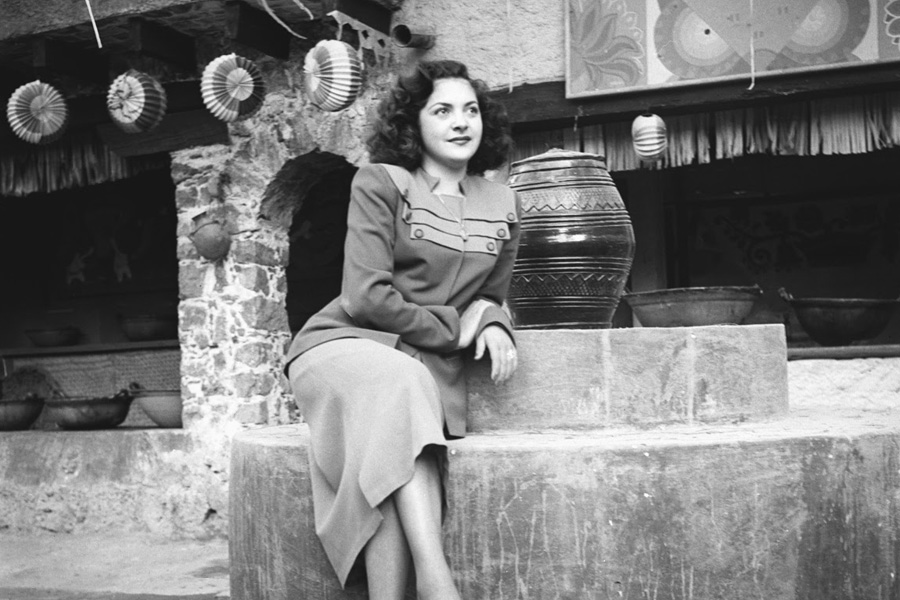
Performers whose careers span generations and who remain loyal to their profession while adjusting to shifting audiences have always impressed me. Among those exceptional people is Carmelita Gonzalez. Formally known as Carmen González Hernández, she rose to fame during the Golden Age of Mexican cinema and went on to establish a similarly esteemed reputation in radio, theater, and television. Through unforgettable supporting roles, constant professionalism, and an exceptional work ethic, she subtly changed Mexican entertainment over nearly 100 films and innumerable television programs.
Carmelita Gonzalez, who was born in Mexico City on July 11, 1928, led a life that demonstrated tenacity, fortitude, and a passion for performing. There is more to her story than just celebrity. In addition, it is about a lifetime dedication to artistic expression, family, and perseverance.
Early Life and Family Background
I find Carmelita’s childhood especially interesting because it reveals how determination often grows in difficult circumstances. She was born as Carmen González Hernández to Enrique González del Campo and Soledad Hernández. She grew up in a large household with seven brothers, making the family eight children in total.
Her father believed she should pursue a practical career. He encouraged her to study industrial relations and expected her to build a stable professional future outside the entertainment industry. Fortunately for Carmelita, her mother supported her artistic ambitions, giving her the confidence to follow her dreams despite her father’s objections.
She also broadened her education by studying English and French in the United States. Those experiences expanded her worldview before she entered the demanding world of acting.
Entering Mexican Cinema
Every great career begins with a small opportunity. Carmelita’s first film appearance came around 1945. She earned only $21 for an uncredited role, a modest beginning that hardly hinted at the impressive journey ahead.
Her earliest films included Bésame mucho and Camino a Sacramento. Like a seed planted in fertile ground, those first performances gradually blossomed into a career that would last nearly six decades.
The late 1940s and early 1950s became an exciting period for Mexican cinema, and Carmelita steadily earned the trust of directors and producers. Although she often portrayed supporting characters, she brought warmth, realism, and emotional depth to every role.
Working Alongside Legendary Stars
One of the most remarkable aspects of Carmelita Gonzalez’s career was the company she kept. Throughout the Golden Age of Mexican cinema, she shared the screen with many of the industry’s greatest legends.
Among her celebrated collaborators were:
| Actor | Significance |
|---|---|
| Cantinflas | Appeared together in Soy un prófugo. |
| Pedro Infante | Shared the screen in several classic productions. |
| Jorge Negrete | Worked together in Dos tipos de cuidado. |
| Eduardo Fajardo | Became both her co star and later her husband. |
Working with such iconic performers demanded consistency and professionalism. Carmelita earned respect because she elevated every production without seeking the spotlight for herself.
Career Highlights and Awards
I believe one of Carmelita’s greatest strengths was her versatility. She moved comfortably between comedy, drama, family stories, and action films.
Among her most recognized movies were:
- Dos tipos de cuidado in 1953
- Huracán Ramírez in 1953
- Several Huracán Ramírez sequels
- Motel in 1984
Her role as Rosario in Dos tipos de cuidado earned her the prestigious Diosa de Plata award. More than three decades later, she received another major honor when Motel brought her the Ariel Award for Best Supporting Actress in 1984.
These awards reflected decades of dedication rather than brief moments of popularity.
Theater Career and Stage Contributions
Since every performance takes place without a second opportunity, I frequently believe that theater shows an actor’s actual discipline. Throughout her career, Carmelita Gonzalez had a close bond with the stage.
José Zorrilla’s masterpiece drama Don Juan Tenorio has been her most enduring theatrical association. As the play reappeared every year during Día de los Muertos celebrations, she took part in numerous plays over a long period of time, playing various female roles.
Although there are still few comprehensive stage records, her standing in Mexican theater has not diminished. She demonstrated her equal ability in front of theater audiences by juggling her enormous film commitments with live performances.
She did more than just perform. She oversaw the café and candy store at Teatro Jorge Negrete after serving as the administrator of the A.N.D.A. store for around four years. These duties demonstrated her commitment to bolstering Mexico’s artistic scene and assisting other actors.
Television Success
As Mexican entertainment evolved, Carmelita successfully transitioned from cinema to television. Many actors struggled during this shift, but she embraced new opportunities with remarkable ease.
Her television appearances included numerous telenovelas such as:
- Mi destino eres tú
- Por un beso
- Así son ellas
- Alma rebelde
- Gotita de amor
- Ángeles sin paraíso
- Amar otra vez
Her final television role came in Amar otra vez in 2004, where she portrayed Lidia.
She also appeared in Mujer, casos de la vida real, introducing her work to another generation of viewers.
Marriage and Family Life
Behind the cameras, Carmelita’s personal life remained relatively private.
She married Spanish born actor Eduardo Fajardo. Although both enjoyed successful acting careers, their marriage lasted only a short time before ending in divorce.
Despite the separation, their relationship became an important chapter in her life because it brought the birth of their daughter, Paloma del Rocío.
Public information about Paloma remains limited. She has generally stayed away from public attention, though she has appeared in family tributes connected with her mother’s legacy. Some accounts also mention Carmelita’s granddaughter, affectionately known as Palomita.
A few publications have referred to additional children from the marriage, but those reports remain inconsistent. The strongest and most widely accepted information identifies Paloma del Rocío as Carmelita’s principal and publicly recognized child.
Life Beyond Acting
One aspect of Carmelita’s story that I find especially inspiring is her willingness to work in many different roles within the entertainment industry.
Rather than relying solely on acting income, she accepted administrative responsibilities that supported actors and theater operations. Those positions demonstrated humility and practical wisdom.
Her work behind the scenes included:
| Position | Organization |
|---|---|
| Auxiliary in social security | Previsión Social |
| Administrator | A.N.D.A. store |
| Restaurant manager | Teatro Jorge Negrete |
| Candy shop manager | Teatro Jorge Negrete |
These roles kept her connected to colleagues while allowing her to contribute to the artistic community in meaningful ways.
Final Years
Carmelita Gonzalez had serious health issues in her later years. Her public appearances gradually decreased as a result of Alzheimer’s disease.
She lived out her latter years in Mexico City at the Casa del Actor, a home for actors. Her outstanding body of work continued to shine like a lighthouse for fans of Mexican cinema, even as illness clouded many memories.
She was admitted to the hospital in April 2010 due to digestive issues. She later contracted pneumonia and died in Mexico City’s Hospital Santelena on April 30, 2010. Her age was eighty-one.
With her death, a career that had started around 65 years earlier came to an end.
Lasting Legacy
When I look back at Carmelita Gonzalez’s career, I see much more than a long filmography. I see an actress who adapted to changing eras without losing her authenticity.
From the black and white classics of the 1940s and 1950s to television dramas of the early 2000s, she remained a dependable performer who enriched every production through sincerity and skill.
Her legacy lives through nearly 100 films, decades of television work, celebrated theater performances, respected industry service, and the countless audiences who continue to discover her performances.
FAQ
Who was Carmelita Gonzalez?
Carmelita Gonzalez, born Carmen González Hernández on July 11, 1928, was a celebrated Mexican actress whose career spanned film, theater, television, and radio. She became one of the recognizable supporting actresses of the Golden Age of Mexican cinema and remained active until 2004.
What was Carmelita Gonzalez’s birth name?
Her full birth name was Carmen González Hernández.
Who were Carmelita Gonzalez’s parents?
Her parents were Enrique González del Campo and Soledad Hernández. Her father initially opposed her acting ambitions, while her mother encouraged her to pursue her dream.
How many siblings did Carmelita Gonzalez have?
She had seven brothers, making her one of eight children in the family.
Who was Carmelita Gonzalez married to?
She married actor Eduardo Fajardo. Their marriage ended in divorce after a relatively short period.
Did Carmelita Gonzalez have children?
The most consistently documented child is her daughter, Paloma del Rocío. Public information about her family remains limited, although tributes have also mentioned a granddaughter known as Palomita.
What awards did Carmelita Gonzalez receive?
She received the Diosa de Plata award for her performance in Dos tipos de cuidado and won the Ariel Award for Best Supporting Actress in 1984 for her role in Motel.
What were Carmelita Gonzalez’s most famous productions?
Her best known works include Dos tipos de cuidado, Huracán Ramírez, Motel, Mi destino eres tú, Gotita de amor, and Amar otra vez.
What was Carmelita Gonzalez’s contribution to theater?
She frequently appeared in productions of Don Juan Tenorio, participated in Mexican theater throughout her career, and also supported the theatrical community through administrative work at A.N.D.A. and Teatro Jorge Negrete.
When did Carmelita Gonzalez die?
She died on April 30, 2010, in Mexico City at the age of 81 after developing pneumonia following hospitalization for intestinal complications.